Nowadays pubs feel hollow and transactional and simulations of the real thing. They’re corporate fronts lacking the tribal warmth and community of the old alehouses. Pubs used to be extensions of the home: a defining British cultural institution.
Only a few of these old boozers are still about in Liverpool.
In recent years the city has mutated into a hospitality machine: cocktail bars, nightclubs, restaurants, hotels, entertainment venues and shitty mock-Irish pubs are popping up every other week to service the city’s endless frolic and fiesta. It’s now a city of perpetual leisure.
The house of Robert Gutmann has spread its tentacles into Liverpool’s drinking scene and transfused itself into the city’s drinking economy. Corporate big-wigs are taking over. So I decided to embark on a quiet pilgrimage, a glorified pub crawl of sorts across the city region to experience its oldest boozers, to feel the residual warmth and lingering spirit of the past.
After some mooching about the internet, I’ve broken the journey down to four pubs in chronological order of age:
The Scotch Piper (Southport Road, Lydiate, L31 4HD)
Ye Hole in Ye Wall (4 Hackins Hey, Liverpool, L2 2AW)
Volunteer Canteen (45 East St, Waterloo, L22 8QR)
Thomas Rigby’s (23-25 Dale St, Liverpool, L2 2EZ)
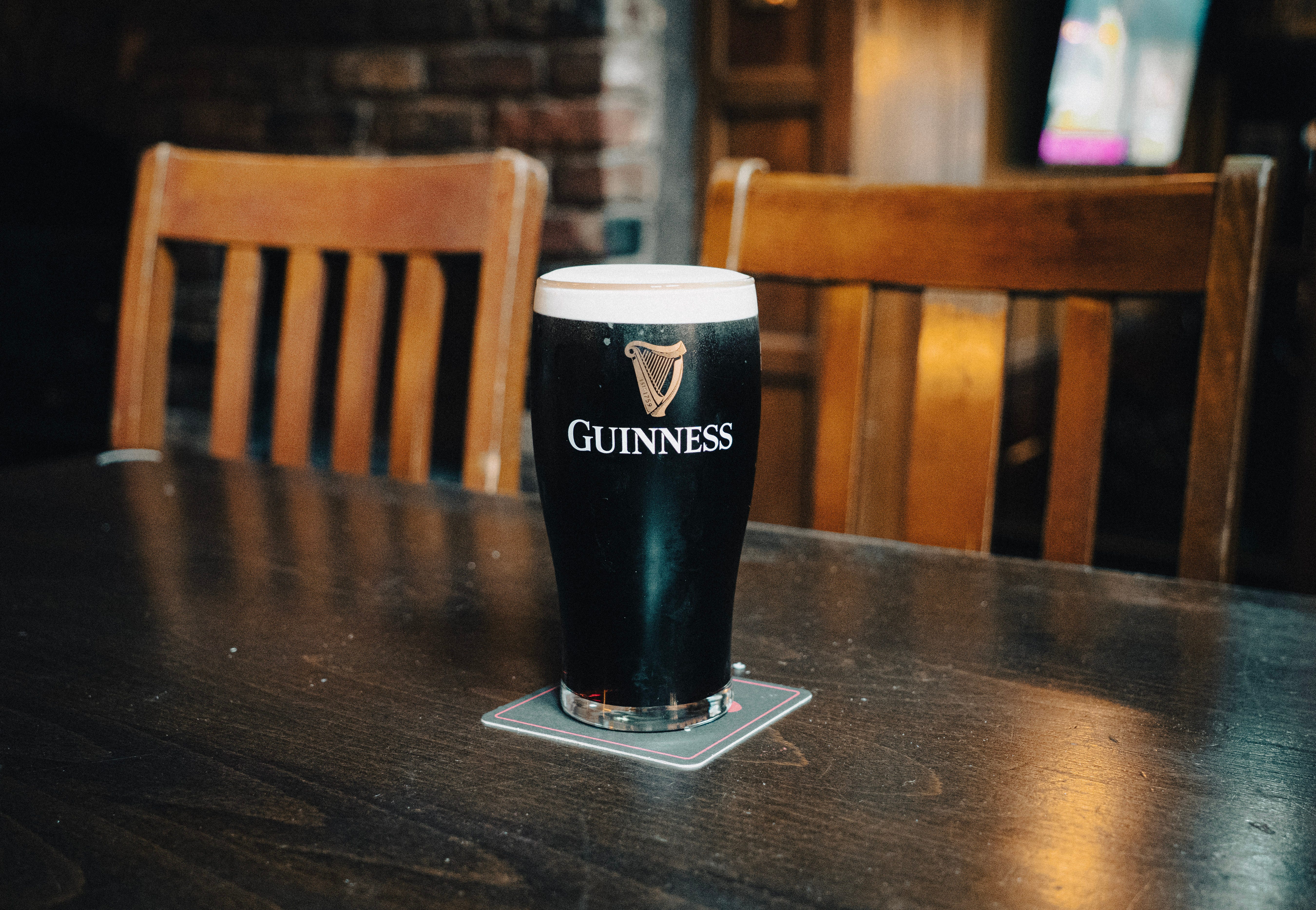
Along the way I’ll give a Guinness review. It’s the only ale I drink. My grandad always told me to stick to one drink and never mix your bevvies.
So, sticking to the wisdom of those who came before me and in the spirit of my ancestors—Guinness it is.
THE SCOTCH PIPER
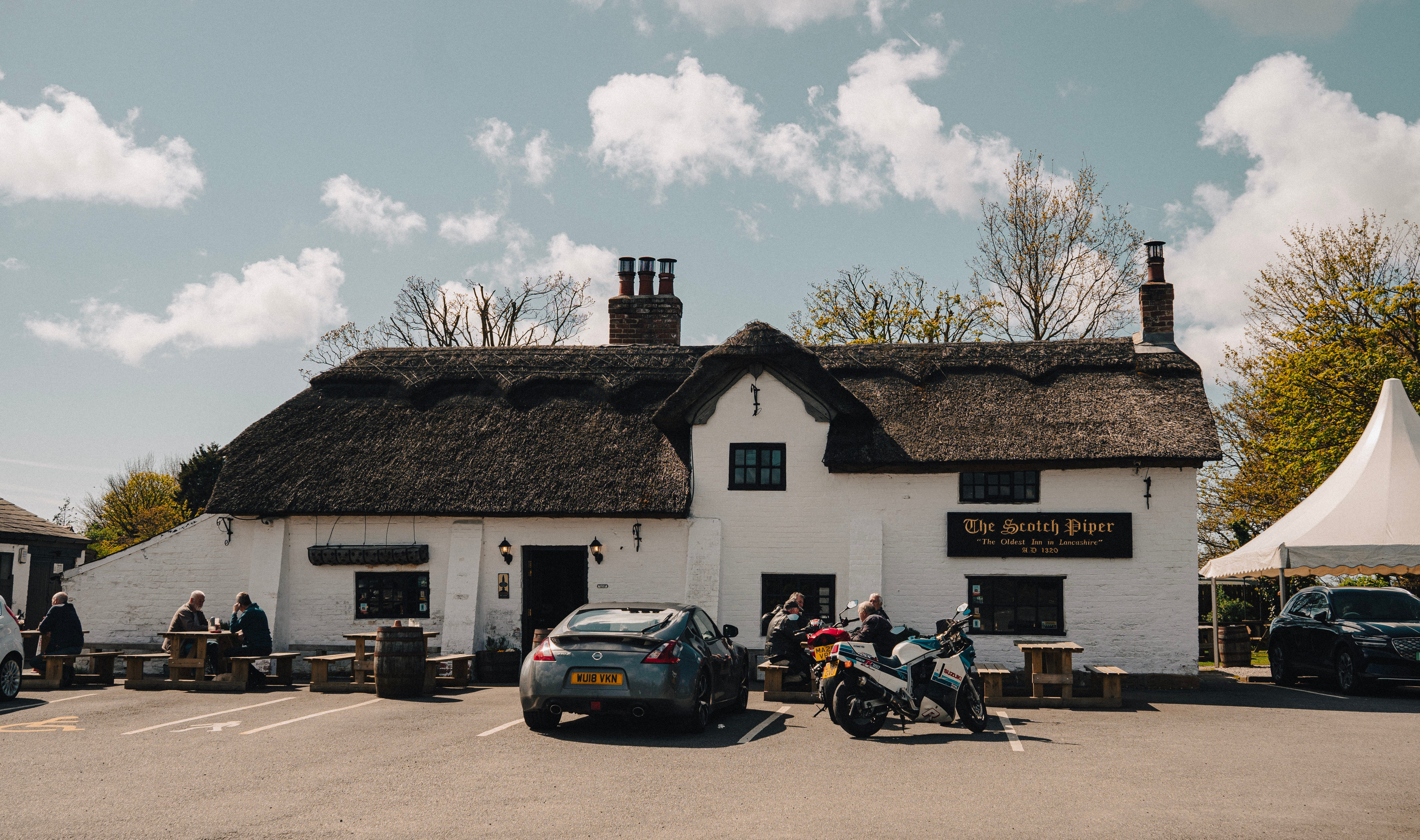
My first stop took me to the fringes of the city, at the threshold of the scouse boundary. West Lancashire is a flat and featureless landscape and one historically used for horse racing (Grand National) and hare coursing (Waterloo Cup).
The open terrain is said to breed a strong strain of hare and is ideal for steeple racing horses. I regard this level plain (the West Lancashire Coastal Plain) as my native soil. Born in Fazakerley hospital and growing up in the L20/L9 area, this northern expanse from the city feels a natural extension of my ancestral lands. This pub is a layer removed, a skip from the city metropolis, and feels rural. But I like that.
It’s very, very old this place. It says 1320 on the door, but like most old pubs it’s impossible to prove. There is no evidence it was built in 1320. But from the records a family by the name of Ireland did build themselves a private church on the grounds of their Lydiate Estate in the 16th century. The ruins of their old chapel still stand today, known as St Catherine's Chapel or Lydiate Abbey.
The pub and the derelict church are really the only substantial structures around here apart from the rows of terraced houses. Prime-time middle-class suburbia these parts.
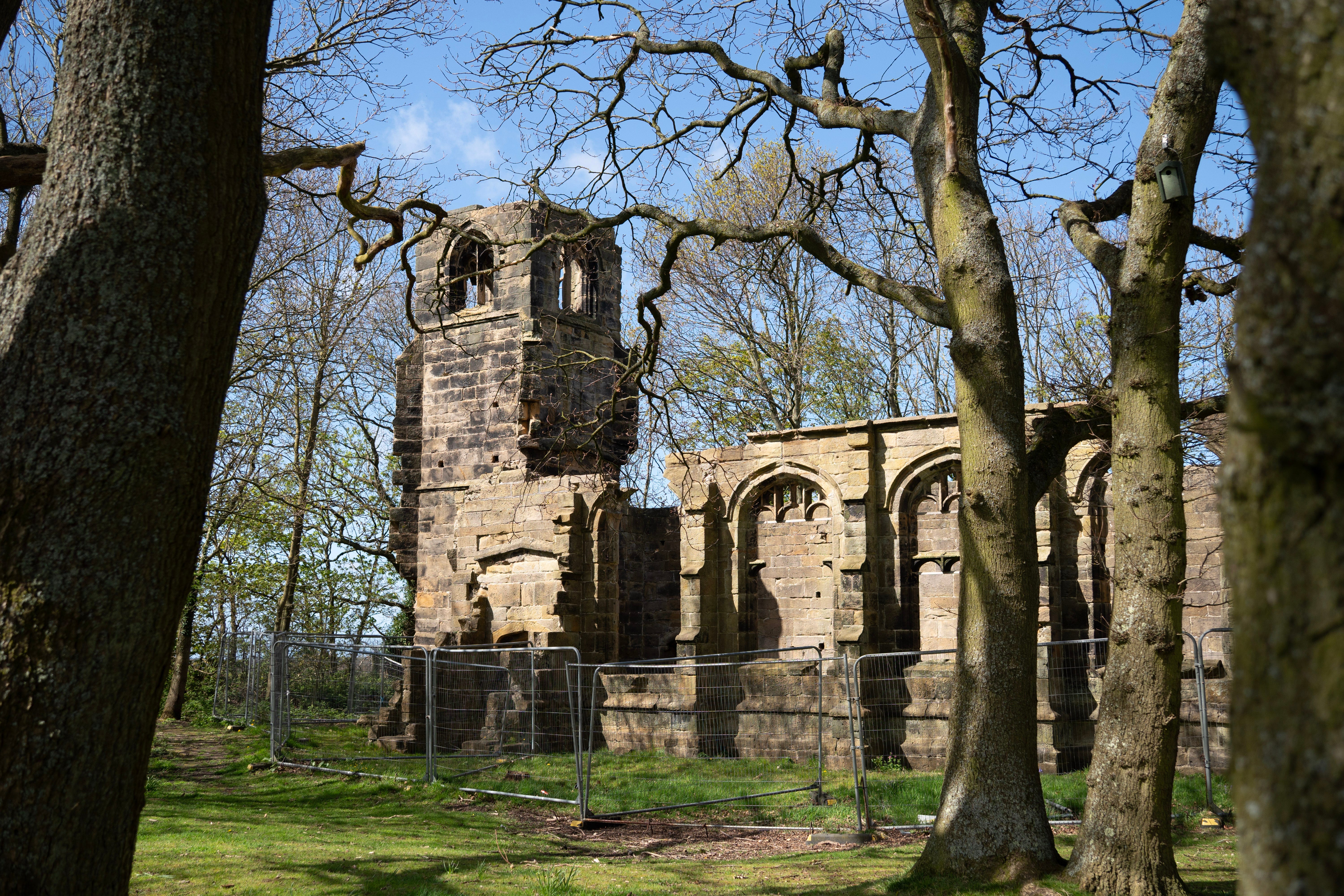
I took a bike ride to The Scotch Piper. It was bright and sunny while cycling along the canal and it felt good to escape the city and feel it diffuse into the green rurality of Lancashire.
But the city is still ever present; throbbing through the canal and networks of roads and trains that fuse this rural village into the scouse motherboard just 10 miles to the south. The metropolis ends here and the ancient county of Lancashire begins to breathe. I stopped on the wooden benches outside the pub and swigged down a bottle of water before committing my stomach to ale.
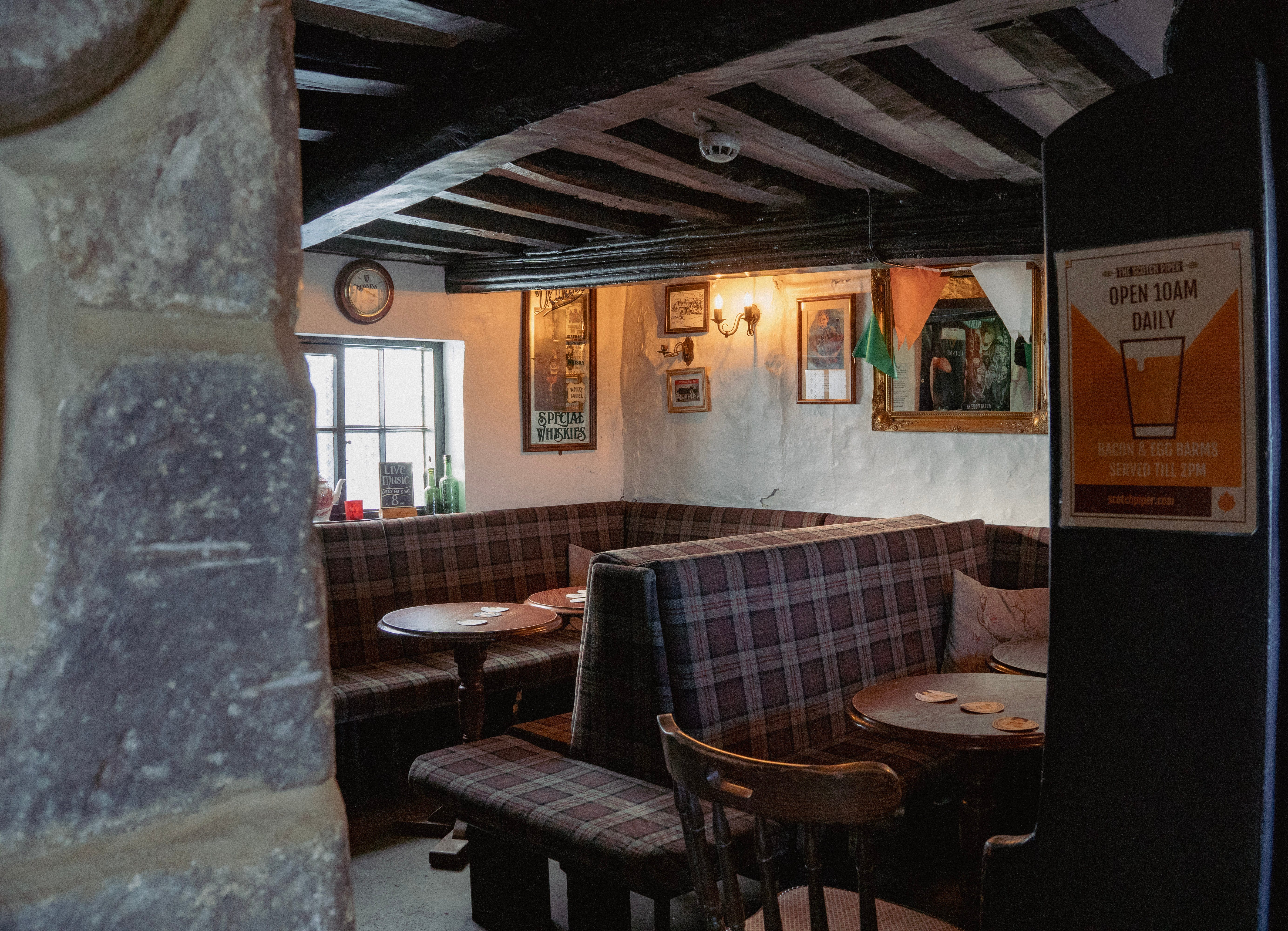
What a weird looking pub; toyish and novel, built in a different time to accommodate a different type of human community. The style is apparently a ‘cruck-frame’: a medieval technique where naturally curved oak timbers are bent to form an arch shaped a-frame. It looks and feels like a little nest. It’s cosy. So it naturally made me crave a pint.
Inside it felt sunken, into the ground and time. It had the smallest bar I'd ever seen, and the rest of the pub was portioned into snugs. I grabbed my pint and sat back outside.
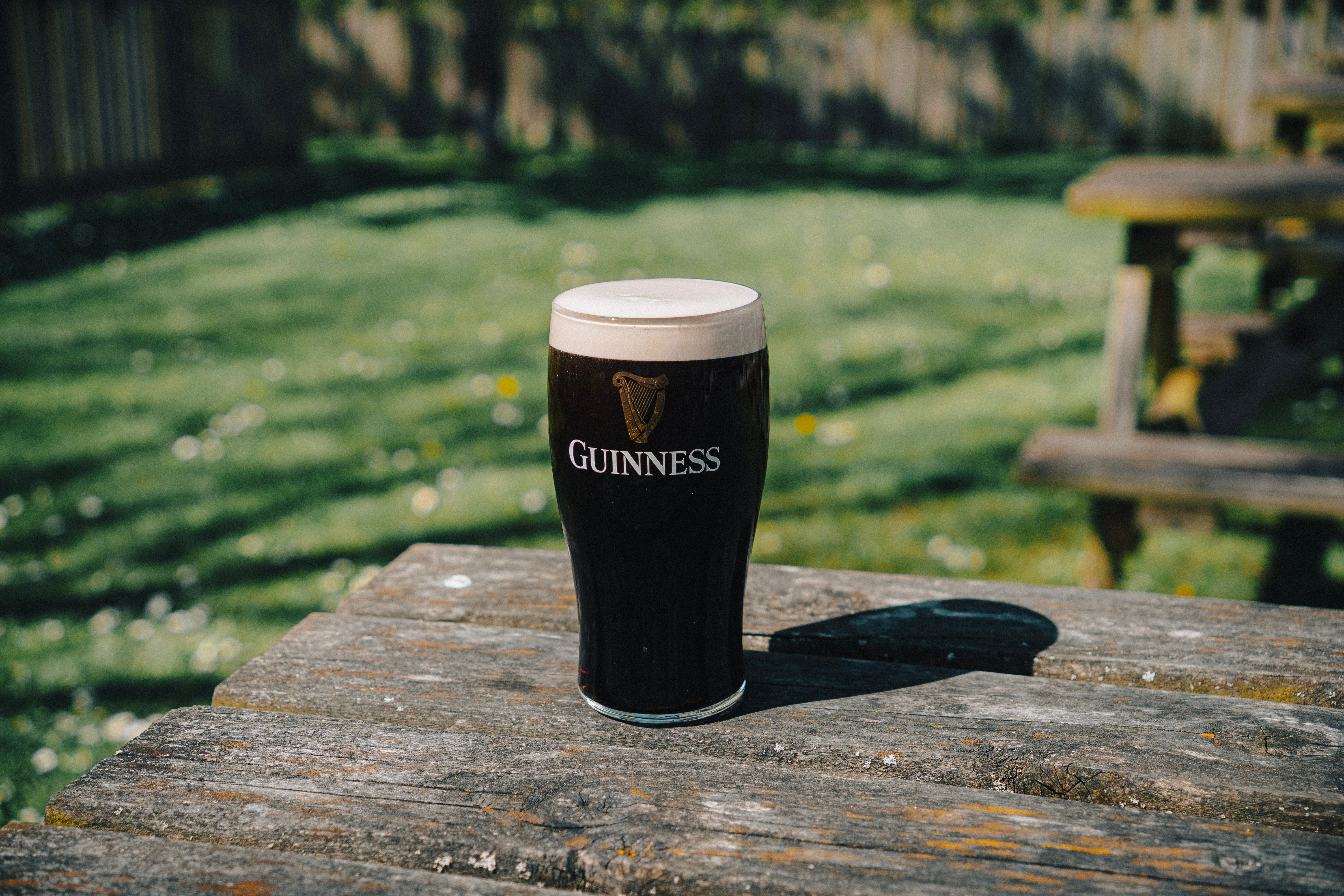
Flatness may be my favourite quality of the landscape, but certainly not in a pint of Guinness.
The pint looked creamy and full when it came out the pump, but the walk from the bar to beer garden deflated it. I wanted to like it because I liked the pub. I liked the area and I liked my bike ride up here. The barmaid handing the pint to me was also so friendly and joyous, so perfectly hospitable and gregariously kind (as if handing me this pint was more a pleasure for her than me) it almost made me ignore the fact it tasted like a mouthful of slummy. After the first few swigs it just lay heavy and stagnant below the G like motor oil.
But maybe the cask or whatever it’s called is better. Lets reel off a few factoids to distract us from this terrible pint: it used to be called The Royal Oak, then The Bag Pipes and The Highlander and finally took the branding of The Scotch Piper after a Highland piper who was injured during the 1745 Jacobite Rebellion who took refuge in the pub and fell in love with, then married, the landlord’s daughter.
But nobody knew any of these people.
The pub? Fantastic little place with a lot of history and pleasant surroundings. The Guinness? Never mind. I'll pop back in for an orange juice when cycling through the area.
YE HOLE IN YE WALL
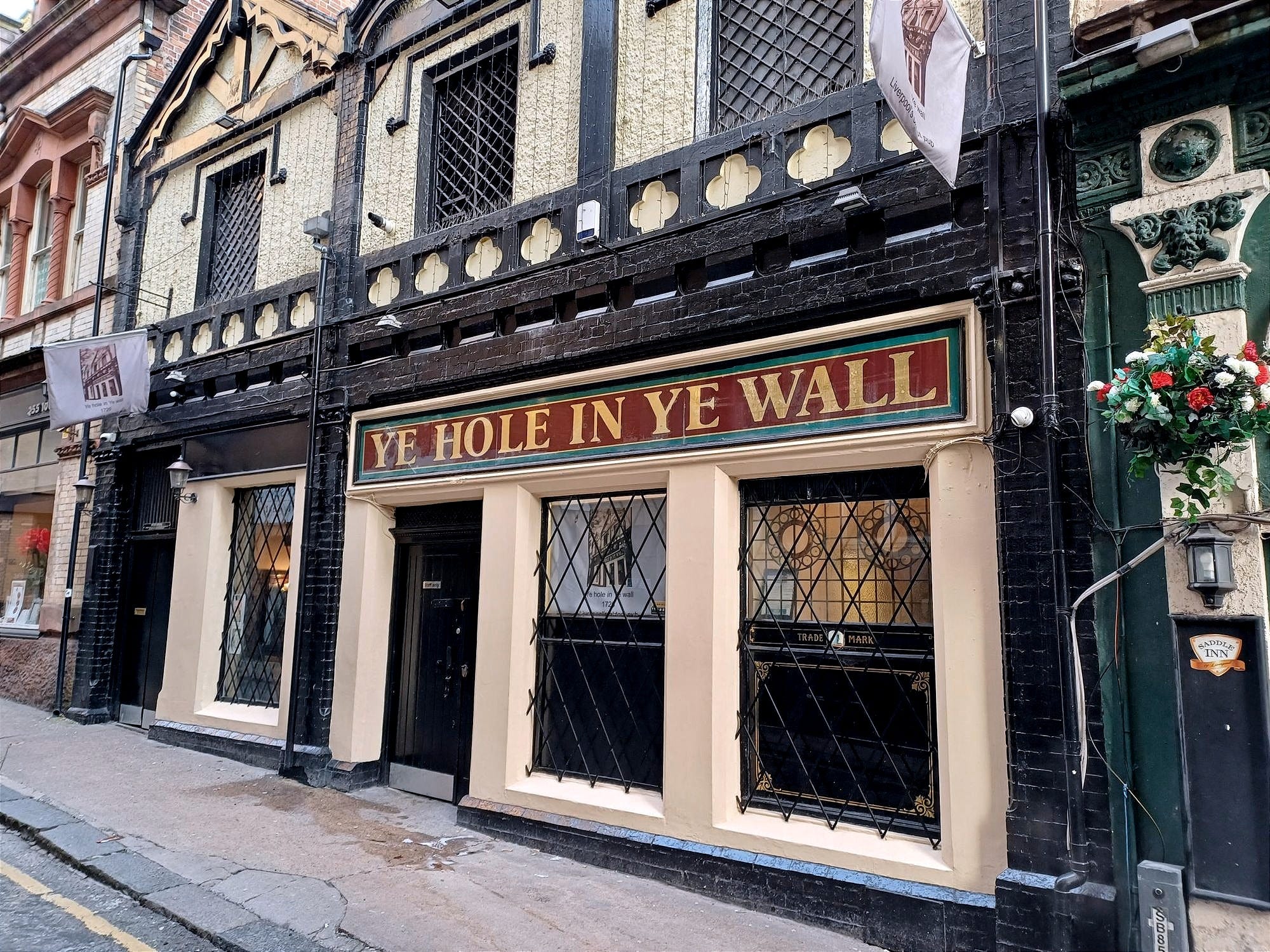
This pub is often cited as the oldest pub in Liverpool city centre. And it’s a vibe shift from quaint and quiet Lydiate village. This is the heart (or heartless) nucleus of the city. The torment of traffic and the flux of flesh hits you like a wave. Walking down from Tithebarn Street into Hackins Hey I wanted to be anywhere but here on this clammy afternoon at rush hour.
The area is always chocker and during twilight hours this majestic business district (using business here to include both illicit and licit trade) transforms into an open feeding ground for the city’s drunk and drugged in a mass intoxication of debauched proportions. Glad I arrived in time to avoid the festivities.
The bar is something you’d see in an estate boozer or parish club: glowing pumps of cheap lager, back wall full of pork scratchings and crisp, advertisements for radioactive alchopop shots.
I was waiting for the barmaid to get off her phone. And standing there, my mind spun through a roulette wheel of hungover flashbacks: blue mornings wandering the streets waiting for taxis, the pavement spewed with takeaways, seagulls cackling and fighting over the scraps, women giving blowjobs and men getting bottled, bouncers knocking students out, transsexuals, people from Birkenhead.
The building isn’t the original. The plaque outside says 1726 but that’s not true and is probably referring to the old Quaker Meeting House. In 1708 an old rate assessment of the quaker house said it was part of a burial ground. It’s been a few things since then until it finally morphed into a school in 1813 that got demolished in 1861. So its impossible for Ye Hole in Ye Wall to have been here since 1726.
I grabbed my pint and sat down and grew curious what others thought about this squalor. I took a scroll over to TripAdvisor. Most people love it, and it was chocker on my visit with what looked like jolly drinkers. But lets cherry pick the bad reviews to fit my obvious negativity bias and vile mood I entered this pub with—for shits and giggles.
Btw, this pint was doggy doo-doo too.
Over on TripAdvisor one concerned lady named Paige made the outlandish claim that Ye Hole in Ye Wall was a ‘racist bar with bigoted staff and vile customers’. Another scathing reviewer echoed similar concerns. She was in shock to find leaflets on the walls proudly brandishing that Adolf Hitler once drank here. Interesting.
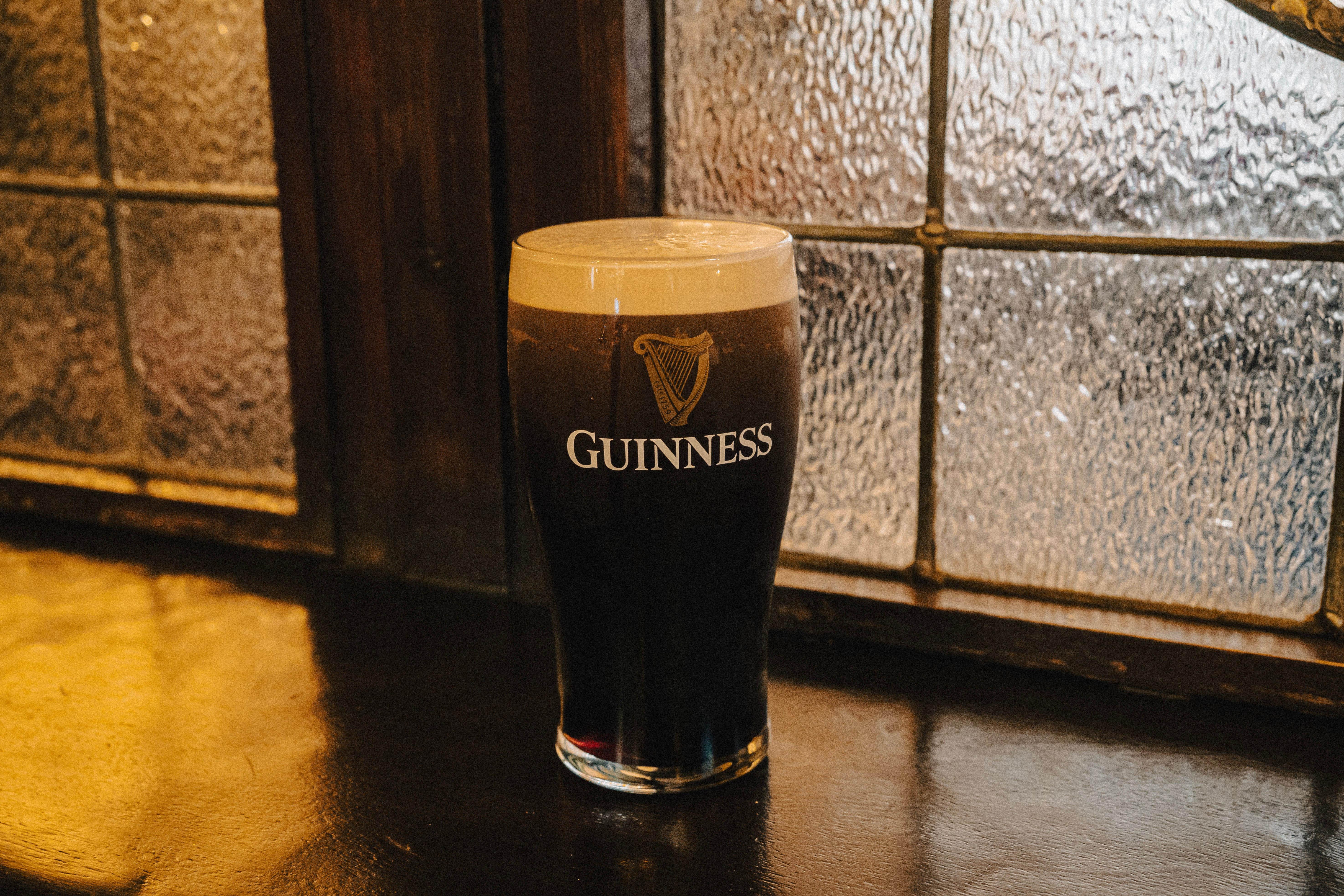
With the exception of a Guinness I once had in north Devon, this was genuinely the worst pint of Guinness I've had in my life. I'm not even trying to be funny. I'm being honest. It was genuinely shite—the head was foamy and it tasted like canal water.
Ye Hole in Ye Wall should be in a hole in the ground. I’m not the TripAdvisor type so I'll just leave this review here.
THE VOLUNTEER CANTEEN
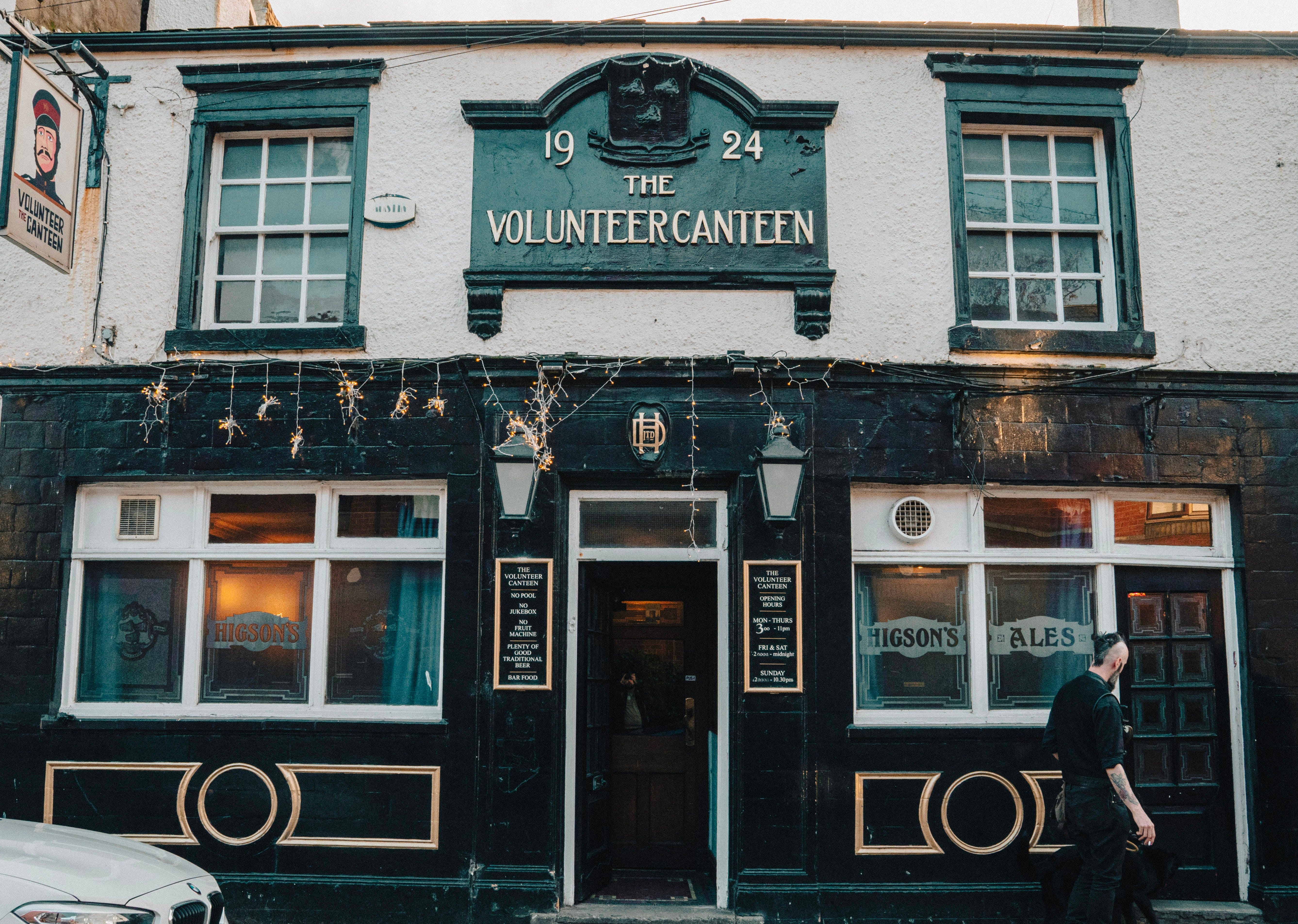
By the time I reached the Volunteer Canteen in Waterloo, a place I'd never visited or was aware existed, I'd pedalled up a violent thirst.
I'd just cycled the perimeter of the city—down the loop line into Speke, through the boulevard and Garston and along the waterfront through Cressington and Otterspool, past the Pier Head then up into Bootle—before landing in Waterloo. It was a gooch-crushing 40-odd miles in the saddle.
I lapped the estate a few times before I found the pub. All the houses were painted in multicolours like Balamory. It was a black-lacquered building with gold gilding with a little garden to the side. It stood out from the technicolour terraces like an oasis, contained within the desert of Crosby beach that glimmered in the sun behind it.
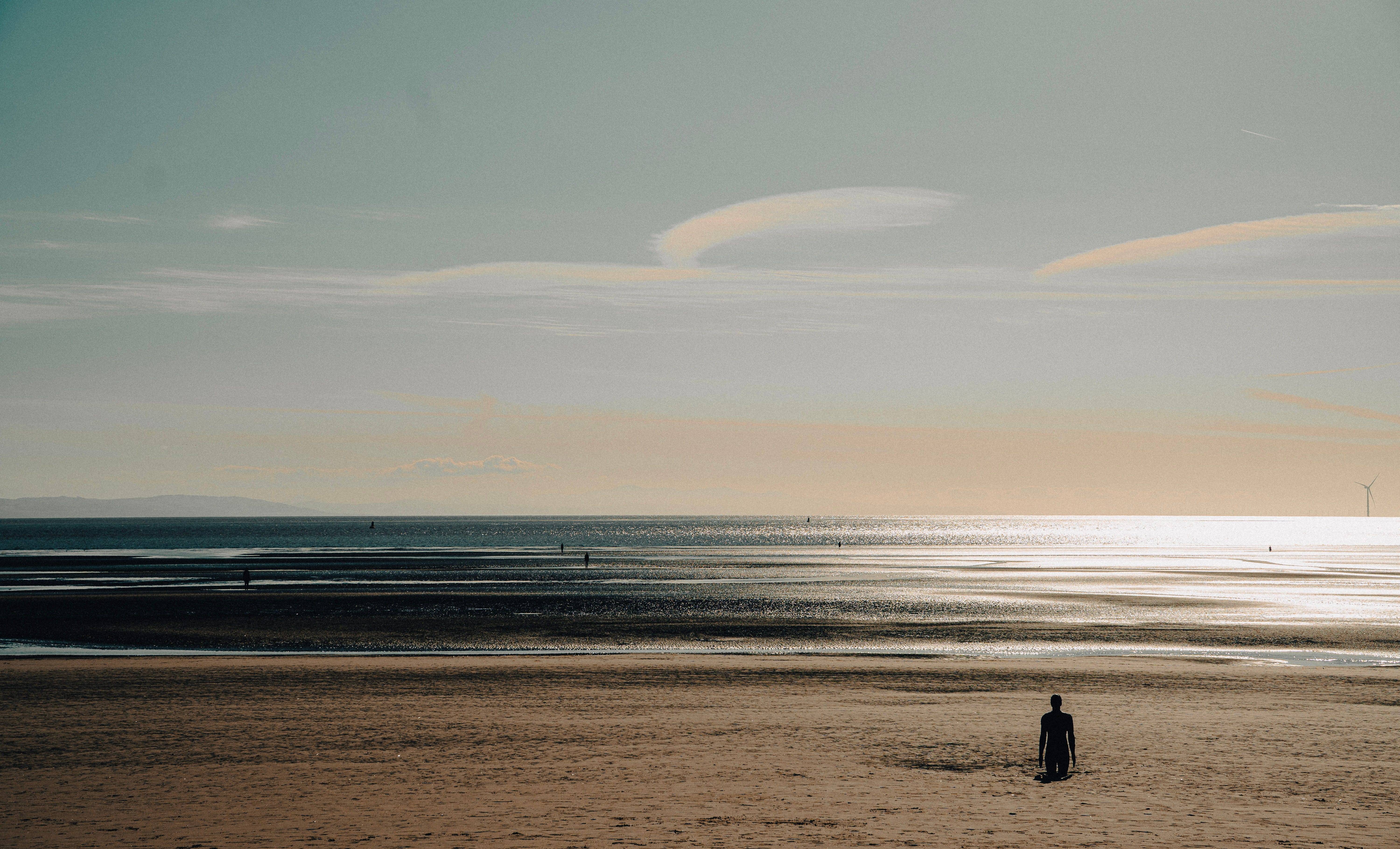
It got the name Volunteer Canteen in 1903 because of an old drill hall next door that helped prepare soldiers going to fight in the Boer War. A few yards from the pub, at 17 marine crescent, was the home of Edward John Smith, captain of the Titanic who stoically sank with his vessel and perished along with 1,500 others on April 15, 1912—just like in the film.
His mate and chairman of the White Star Line (who built the Titanic), J. Bruce Ismay, also lived nearby. Whether or not these two drank in the Volly is a mystery. But it wouldn’t be an exaggeration to think so.
My opinion is probably biased and clouded by the fact my visit was off the back of a long journey in the sun and a sit-down and nice cold pint was very much welcomed. But what a cosey little gem this gaff is. The astringent aroma of hops and fermented barley filled the interior. Locals were chatting away. In the lounge area was a bookshelf and a chair next to a crackling fire which had my name on it.
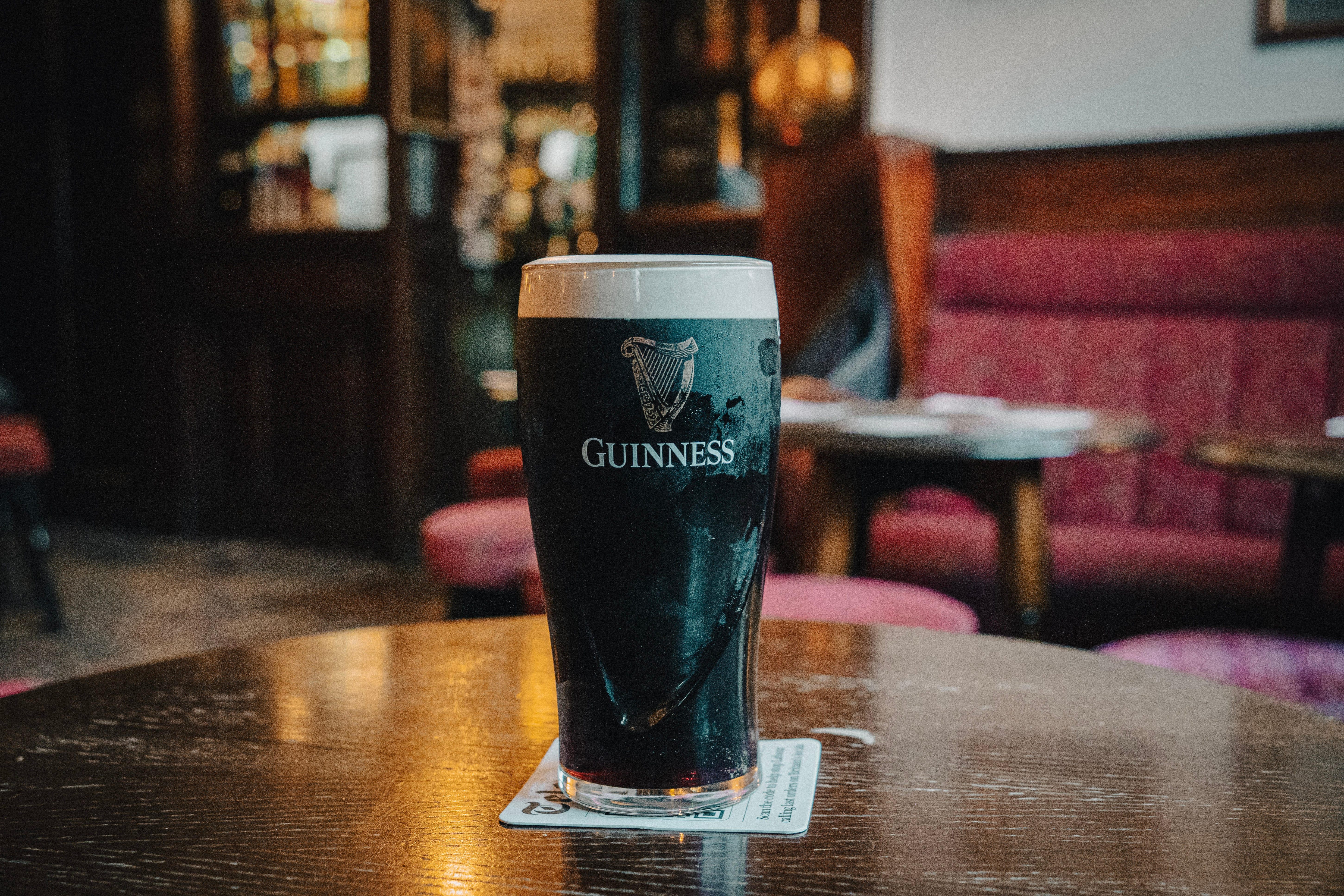
I sat by the window to get a clear photo, capturing this pint in all its glory. And I was convinced: I was about to sink my own ship and submerge myself in currents of stout. In memory of captain Eddie, I thought, and ordered another pint of the good gear—then another, and another, and more. It was only right.
With the salty prospect of the Irish Sea behind me and the saline smell of the sea breeze wafting in through the door, it was too evocative of a situation for me to not drink eight more pints. It turned out to be the best Guinness of the trip; creamy and cold and tasting like Waterloo needed me to crawl its pubs.
But I didn’t. I fought my natural urge to jump from one thing to the next. I couldn’t be arsed and I had my bike locked to the street sign over the road. I stayed in the Volly all night got bladdered. Many folk were conversed with, many stories were told, a few bags of crisps and packets of nuts were ate to absorb the onslaught and giggles were had. A fuming Uber driver was granted the pleasure of loading my bike into his boot at midnight and driving me home.
I staggered up the path and into my house and then up the stairs and into bed where I plonked out. And to my surprise, woke up fresh the next morning.
THOMAS RIGBY’S
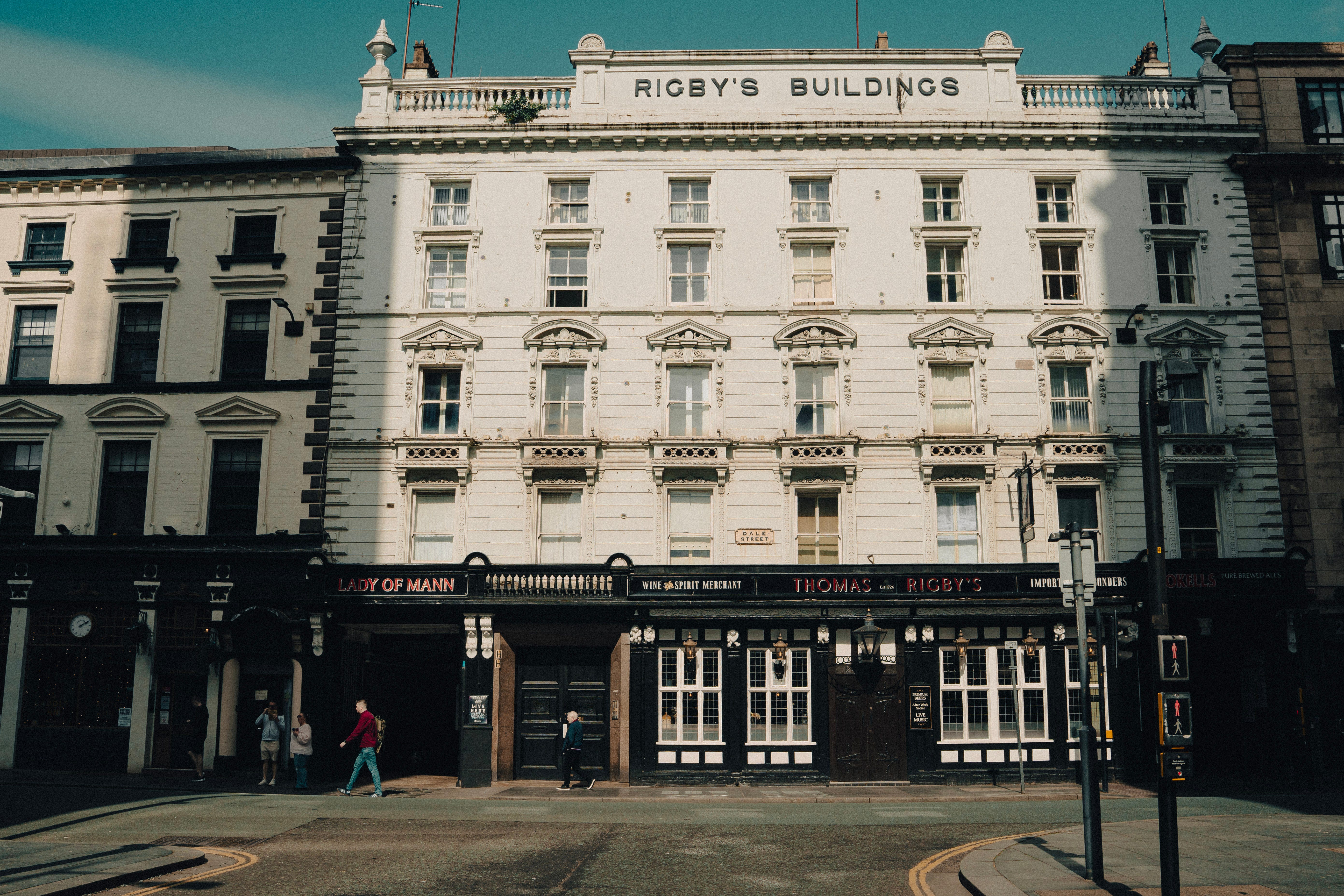
We’re back in town, just around the corner from Ye Hole in Ye Head.
I've walked past Thomas Rigby's thousands of times and never bothered to go in. It’s essentially a sports bar now and full of pissheads. Tucked into the middle of Dale Street, it’s one of Liverpool's original ‘seven streets’ and is surrounded by some of the city’s finest architecture. And what a splendid sight these monuments are.
Like I said, the area has fallen from grace and is now a Skid Row full of junkies and the like. Homeless line the pavements, begging, and tents cluster under limestone arches and wooden doorways of buildings that now lay as mute witnesses to the city’s once opulent past.
I know the levels this place can sink to. I used to live on Temple Lane. The author Herman Melville stayed at the old White Bear Hotel and walking towards the ‘chain of immense fortresses’ of the docks, he wrote:
The first time that I passed through this long lane of pauperism, it seemed hard to believe that such an array of misery could be furnished by any town in the world.
You’ll see things around here that’ll make a coroner vomit, and discarded sharps that would infect the entire river Mersey with hepatitis. Liverpool is (for better or worse) a city blessed and tainted by its port. from its very conception, there has always been a thriving black market and sinister underworld within the city that is still thriving to this day.
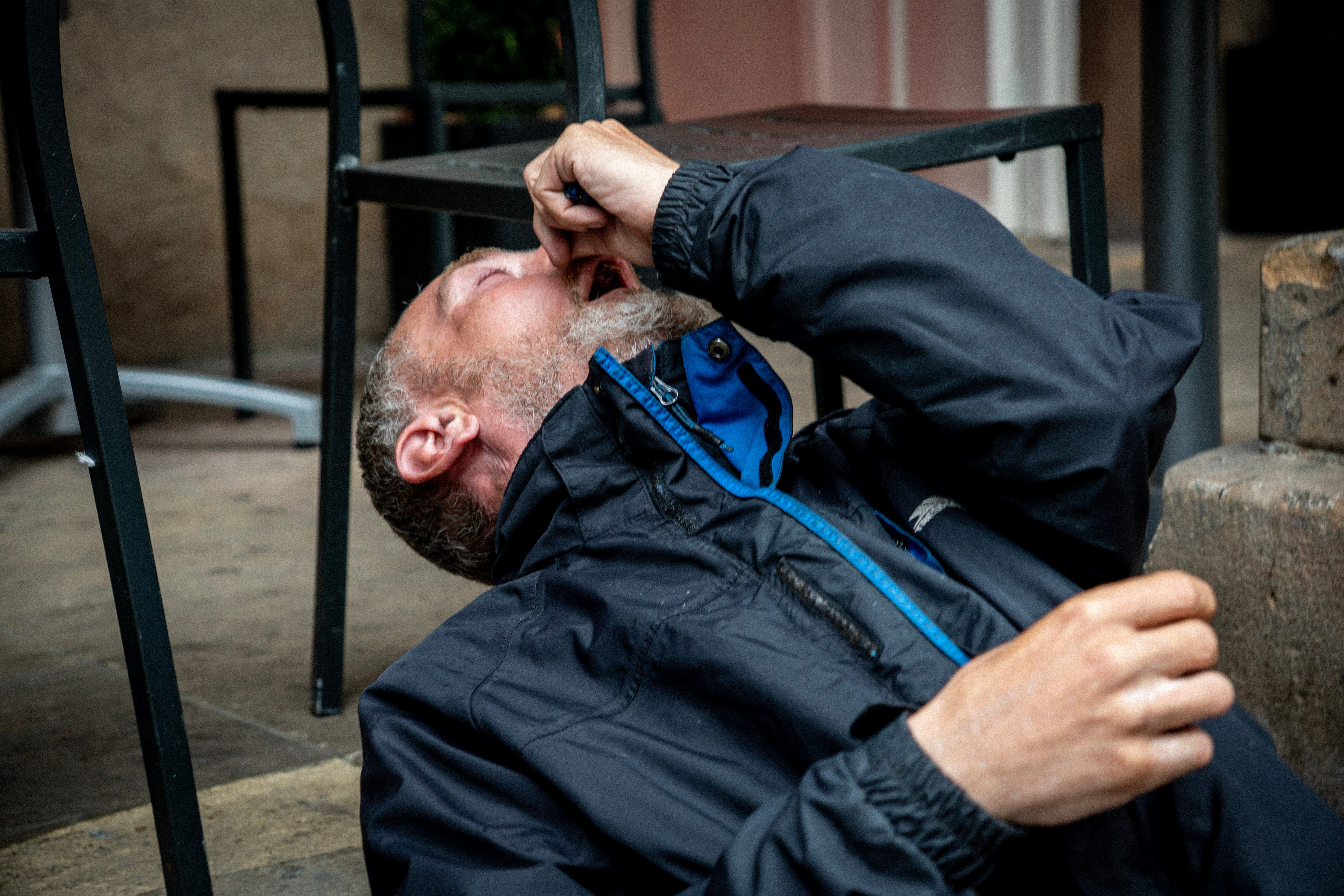
There’s a YMCA up on Leeds Street. I picture this as the home of the queen bee junkie from where all the drone junkies swarm the radius of Dale Street and freely indulge in cracktivities: shooting up heroin and smoking crack in the street, defecating in the street, burgling shops and cafes, stealing bikes and mugging students at knife point. Dale Street is crackhead central, and they’re given free reign.
Anyway… I took a sip of the pint (an above average Guinness) and did some research. By chance I'd just been to Henry Bohn bookshop on London road and bought a book called A Pub on Every Corner by Freddy O'Connor. and inside the book was a chapter on Thomas Rigby's.
He arrived in Liverpool in 1803 from Lowton Common and set up shop as a wholesaler in wine and spirits. He quickly established himself as a successful businessman and conservative politician and owned a string of hotels and pubs and won a seat on the council for St Paul's ward in 1860.
His life story is in tune with the trajectory of the city’s rise to prominence: the exploits of commerce being spoiled into the arts. This is the spirit of Liverpool, even symbolised in a statue of the same name sitting atop the Walker Art Gallery. The city has many blessings but with that came many curses. I drank my pint and went home.
If any advice can be taken from this, it’s stay away from Liverpool city centre if you want a quiet pint inside an old boozer. Get out of the metropolis—flee, before it’s too late. Go to the Volly or the Scotch Piper: belter pubs with their history still alive and a strong sense of local character.
Our cities are foreign lands and theme parks for strangers.